
Free AI Web & E-commerce
The most advanced and reliable free AI-powered tools for web & e-commerce. Save time and budget with these vetted solutions.
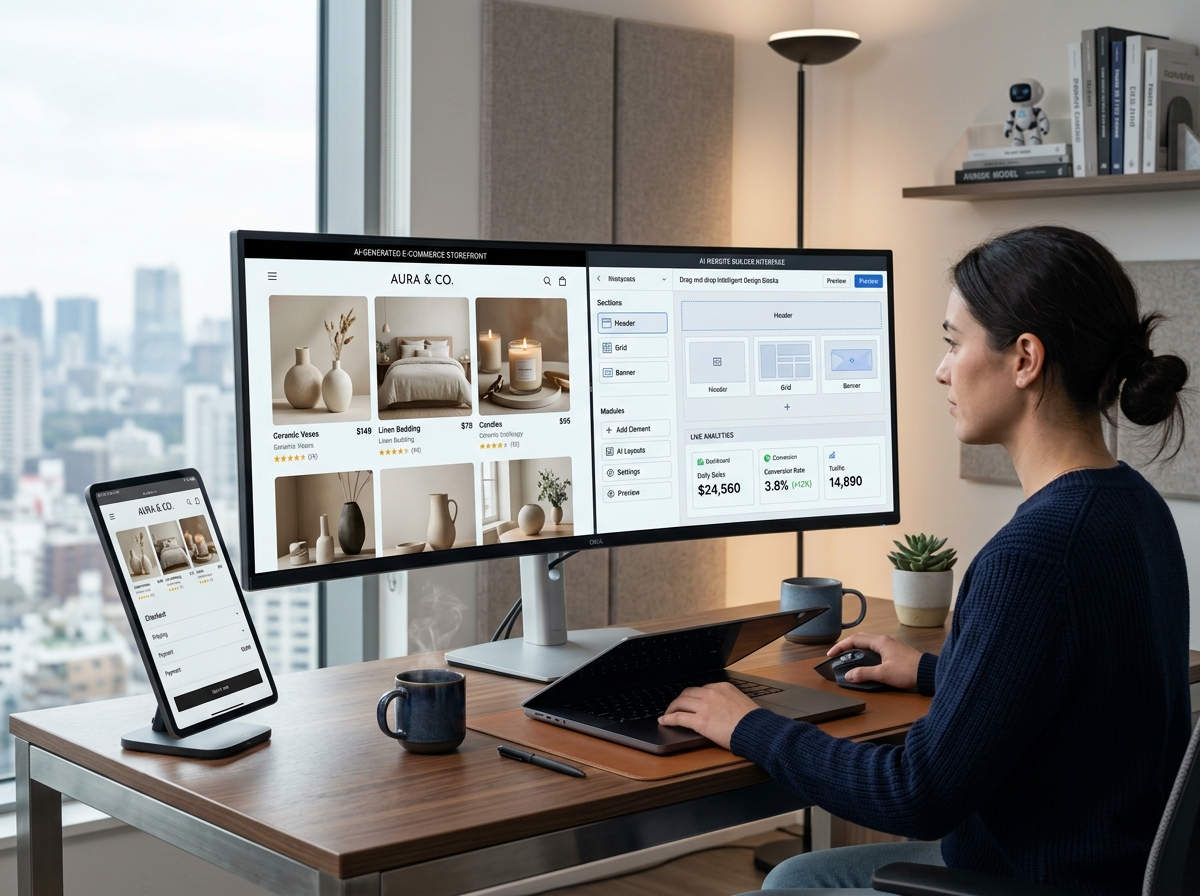
What Are the Best Free AI Web & E-commerce Tools in 2026?
The e-commerce landscape has undergone a seismic shift over the past three years, and the catalyst is undeniably artificial intelligence. What once required a team of developers, copywriters, and conversion rate optimization specialists can now be accomplished by a single founder working from a laptop with a solid Wi-Fi connection. AI web and e-commerce tools encompass a broad spectrum of applications: AI-powered website builders that generate complete storefronts from a text prompt, intelligent product description generators that write persuasive copy in seconds, visual search engines that help shoppers find products by uploading photos, and predictive analytics platforms that forecast inventory demand with uncanny accuracy. For small business owners and independent sellers, these tools represent the great equalizer, allowing them to compete with enterprise-level operations that have budgets in the millions. The value proposition is simple: why spend $5,000 on a custom website design when an AI tool can produce a polished, conversion-optimized storefront in under an hour? Why hire a copywriter at $50 per hour when an AI can generate 500 variations of product descriptions for free? The answer, explored throughout this guide, is that the free tiers of these tools are remarkably generous, and in many cases, they are more than sufficient to launch, manage, and scale a thriving online business.
As we move through 2026, the integration of AI into e-commerce is no longer a novelty; it is a baseline expectation. Shoppers now expect personalized product recommendations, instant chatbot support, and seamless visual search capabilities. According to recent industry reports, over 70% of online retailers have adopted at least one AI-powered tool, and that number continues to climb. The democratization of AI has also led to an explosion of new tools entering the market, each promising to solve a specific pain point. However, navigating this crowded landscape can be overwhelming, especially when you are operating on a tight budget. This is precisely why understanding the free offerings is critical. The free versions of these tools are not afterthoughts; they are strategically designed to showcase the core value proposition, allowing users to experience the "wow" factor before committing to a paid plan. For a new store owner, the ability to generate a professional logo, write compelling product descriptions, and set up automated email campaigns without spending a dime is not just a nice-to-have; it is a lifeline that allows them to reinvest their limited capital into inventory and marketing.
When it comes to the most impressive free offerings in this space, a few names consistently rise to the top. Shopify's AI Suite offers a free logo maker, a product description generator, and a business name generator that are surprisingly robust for a platform known for its paid ecosystem. The free tools are designed to bring you into the fold, and they do so by delivering genuine value. Similarly, Wix's AI Website Builder allows you to answer a few questions about your business and generates a fully functional, mobile-responsive website with e-commerce capabilities built in. The free tier includes Wix branding, but the AI-generated design is so polished that many users find the watermark acceptable for initial testing. Another standout is Jasper.ai, which, while primarily a paid tool, offers a free trial that includes 10,000 words of AI-generated copy. For a small product catalog, this is often enough to generate all the descriptions, email sequences, and ad copy you need to launch. These tools demonstrate a common thread: the free versions are not crippled or useless; they are strategic entry points that provide real, tangible value.
What Can You Do for Free with AI Web & E-commerce Tools?
The range of tasks you can accomplish with free AI web and e-commerce tools is genuinely staggering. For starters, you can generate a complete, professional-looking website. AI website builders like Wix and Framer allow you to describe your business in a few sentences, select a style preference, and receive a fully designed, multi-page website with integrated e-commerce functionality. This includes product pages, a shopping cart, and a checkout process. The free versions typically include a subdomain (like yourbusiness.wixsite.com) and display platform branding, but the design quality is often indistinguishable from a custom-built site. Beyond website creation, you can generate unlimited product descriptions. Tools like Copy.ai and Rytr offer free tiers that allow you to input a product name and a few keywords, and they will generate multiple variations of persuasive, SEO-optimized descriptions. For a store with 50 products, this alone saves days of writing time. You can also create professional product images using AI image generators like Canva's Magic Media or Bing Image Creator, which allow you to generate realistic product shots on transparent backgrounds or with custom backdrops. This is particularly valuable for dropshippers who need to create unique visuals for products they have never physically seen.
However, it is essential to understand the limitations of free versions. The most common constraint is the watermark. Website builders like Wix and Weebly display their branding on your site until you upgrade, which can look unprofessional if you are trying to attract serious customers. AI image generators often produce images with lower resolution on free tiers, which can appear pixelated on large product pages. There are also quotas to consider. Jasper's free trial, for example, is limited to 10,000 words, which may not be enough for a large catalog. Rytr offers 10,000 characters per month on its free plan, which is roughly 1,500 words; this is sufficient for a small blog or a handful of product descriptions, but it runs out quickly if you are generating content daily. Another significant limitation is the lack of advanced features. Free tiers typically do not include A/B testing, advanced analytics, or integrations with third-party tools like email marketing platforms or CRM systems. Speed is also a factor; AI generation on free tiers can be slower during peak times, as paid users receive priority access to the underlying models. Finally, customer support is often non-existent or severely limited on free plans, so if you encounter a technical issue, you are largely on your own, relying on community forums and help docs.
Despite these limitations, there are numerous real-world scenarios where the free version is not just sufficient but ideal. Consider a solo entrepreneur testing a new product idea. They can use a free AI website builder to create a landing page, generate product descriptions with a free AI copywriter, and create social media images with a free AI image generator. The total cost is zero, and the time investment is less than a day. If the product fails to gain traction, they have lost nothing but a few hours. If it takes off, they can then invest in paid tools to scale. Similarly, a small business owner who already has an established website can use free AI tools to refresh their content. They can generate new blog posts, rewrite outdated product descriptions, and create fresh email marketing copy without paying a cent. The free tier serves as a perfect testing ground to evaluate whether a tool's output quality meets your standards before you commit to a subscription. In many cases, the free version becomes a permanent part of your workflow, especially for low-volume tasks where the quotas are more than adequate.
Key Features of Free AI Web & E-commerce Tools
- AI-Powered Website Generation: The core feature of any AI web tool is its ability to generate a complete, functional website from a simple text prompt. This goes beyond basic templates; the AI analyzes your industry, the products or services you offer, and your target audience to create a unique layout, color scheme, and content structure. The best free tools allow you to regenerate the entire design with a single click if you are not satisfied, and they offer granular control over individual sections, allowing you to swap out images, change text, and rearrange elements without touching a line of code.
- Automated Product Description Generation: Writing compelling product descriptions is a critical skill that many entrepreneurs lack. AI copywriting tools solve this problem by generating persuasive, keyword-rich descriptions in seconds. Free versions typically allow you to input the product name, key features, and a target tone (professional, playful, luxury), and the AI will produce multiple variations. This is particularly useful for e-commerce stores with large catalogs, as it eliminates the bottleneck of manual writing.
- Visual Product Image Generation: High-quality product images are non-negotiable for e-commerce success. Free AI image generators allow you to create professional-looking product shots from scratch or edit existing photos. You can remove backgrounds with a single click, change the lighting, or place your product in a completely new setting. Some tools even allow you to generate lifestyle images showing the product being used, which dramatically increases conversion rates.
- SEO Optimization and Keyword Suggestions: Ranking high on search engines is the lifeblood of organic e-commerce traffic. Many free AI tools include built-in SEO analysis that scans your website or product descriptions and suggests improvements. This includes keyword recommendations, meta title and description suggestions, and readability scores. Some tools even analyze your competitors' websites to identify keyword gaps you can exploit.
- Basic Analytics and Performance Tracking: Understanding how visitors interact with your site is essential for making data-driven decisions. Free tools typically offer basic analytics, including page views, unique visitors, bounce rate, and conversion tracking. This data helps you identify which products are performing well and which pages need improvement. While not as comprehensive as paid analytics suites, this baseline data is invaluable for a new store.
- AI Chatbot Integration for Customer Support: Providing 24/7 customer support is a challenge for small businesses. Free AI chatbot tools can be integrated into your website to answer frequently asked questions, guide users through the purchasing process, and even process basic orders. While the free versions are limited in terms of custom training data, they can be surprisingly effective at handling common queries, freeing up your time to focus on other aspects of the business.
Who Should Use Free AI Web & E-commerce AI Tools?
The target audience for free AI web and e-commerce tools is remarkably diverse. At the forefront are solo entrepreneurs and micro-business owners who are bootstrapping their ventures. These individuals often have limited capital and even more limited time. They need to wear every hat: CEO, marketer, web developer, and customer service representative. Free AI tools allow them to delegate the most time-consuming tasks to an algorithm, freeing them up to focus on product sourcing, customer relationships, and strategic growth. Freelancers and digital nomads also benefit immensely. A freelance web designer can use AI website builders to quickly prototype a site for a client, demonstrating the potential design direction before committing to a full build. A freelance copywriter can use AI to generate initial drafts, which they then refine and personalize, increasing their output and earning potential. Small marketing agencies with tight budgets can leverage free AI tools to deliver a wider range of services to their clients, from SEO audits to content creation, without needing to hire additional staff.
Beyond individual users, free AI tools are also valuable for educational purposes. Students studying e-commerce, digital marketing, or web development can use these tools to build portfolios, experiment with different design approaches, and understand the mechanics of online selling without incurring any costs. Similarly, non-profit organizations and community groups that need to sell merchandise or accept donations online can benefit from free AI website builders, which allow them to create a professional online presence without diverting funds from their core mission. The use cases are not limited to physical products; service-based businesses, such as consultants, coaches, and therapists, can use AI tools to build landing pages, generate lead magnets, and automate appointment scheduling. In every case, the free tools serve as an accessible entry point into the world of AI-powered e-commerce.
However, there comes a point when the free version is no longer sufficient, and you should consider upgrading to a paid plan. The first sign is when you begin to feel constrained by the quotas. If you are consistently hitting the word limit on your AI copywriting tool or the image generation limit on your design tool, it is a clear indication that the free tier is impeding your productivity. The second sign is when the branding or watermark starts to cost you credibility. If you are pitching to a major client or running a serious marketing campaign, having "Powered by Wix" or a similar watermark on your website can undermine your professionalism. The third sign is when you need advanced features that are simply not available on the free tier, such as A/B testing, advanced segmentation, or integrations with your CRM or email marketing platform. When these scenarios arise, the cost of the paid plan is justified by the value it unlocks. The transition from free to paid should be viewed as a strategic investment in your business's growth, not an unnecessary expense. By starting with free tools, you have been able to validate your business model, refine your offerings, and build a foundation. Now, the paid tools will help you scale that foundation into a thriving enterprise.
Best Free AI Web & E-commerce Tools & Software
Explore our curated selection of verified free web & e-commerce solutions, offering generous free plans, freemium features, or zero-cost access.