
Free AI Text-to-Music
The most advanced and reliable free AI-powered tools for text-to-music. Save time and budget with these vetted solutions.
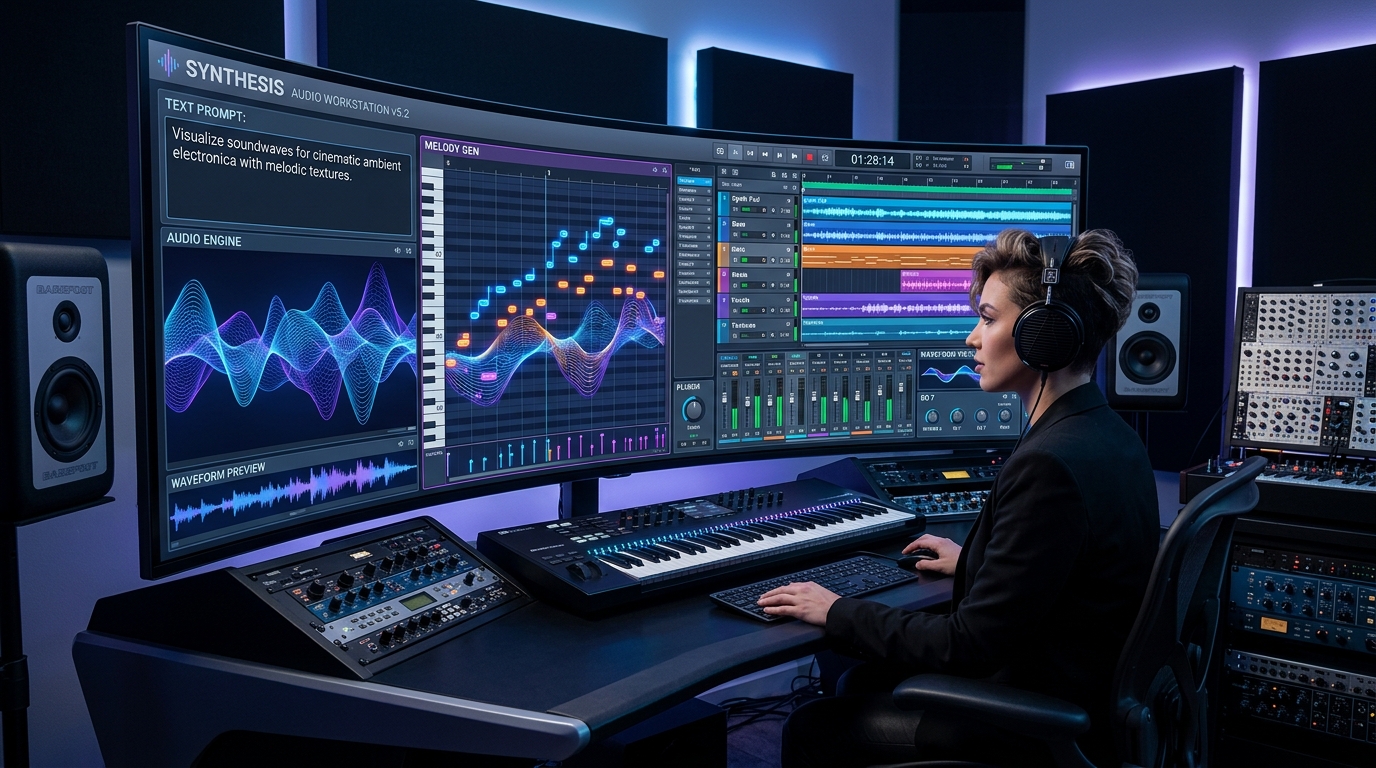
Why Are Free AI Text-to-Music Tools Transforming Content Creation in 2026?
The landscape of digital audio production has undergone a seismic shift, moving from expensive studio setups and complex digital audio workstations to intuitive, browser-based generative platforms. Free AI text-to-music tools represent the democratization of musical composition, allowing anyone with a creative vision to generate professional-grade soundtracks without learning theory, instrumentation, or arrangement. These platforms leverage advanced diffusion models and transformer architectures trained on millions of licensed and synthetic audio tracks, translating textual prompts into structured melodies, harmonies, rhythms, and full arrangements in seconds. For creators operating under tight budgets, these solutions eliminate the traditional barriers of entry, turning abstract ideas into audible experiences with minimal friction. The value proposition centers on accessibility: you no longer need to invest thousands in plugins, sample libraries, or freelance composers to achieve broadcast-quality results.
In 2026, the demand for original, copyright-safe audio has never been higher. Social media algorithms reward consistent visual storytelling paired with dynamic soundscapes, while independent filmmakers, podcasters, and app developers require adaptable background tracks that align precisely with their narrative pacing. Free AI music generators excel in these scenarios by offering rapid iteration cycles, genre-spanning versatility, and instant export capabilities. Unlike static royalty-free libraries that often suffer from repetitive patterns and dated production quality, modern text-to-music engines adapt to your exact specifications, whether you need a lo-fi study beat, an epic cinematic trailer score, or a corporate tech keynote underscore. The technology has matured to the point where subtle imperfections once associated with early AI generations are virtually eliminated, making free tiers viable for real-world deployment rather than mere experimentation.
Among the leading platforms delivering exceptional free-tier value, Suno AI stands out for its highly responsive prompt parsing and consistent structural coherence, offering daily credits that allow creators to generate multiple full-length compositions without immediate payment. Similarly, Udio provides robust vocal synthesis integration and flexible tempo control within its complimentary tier, making it ideal for lyrical track development and melody mapping. For producers seeking atmospheric textures and ambient sound design, Stable Audio delivers precision timing controls and clean instrumental outputs, granting free users ample capacity to prototype sonic identities before committing to commercial licensing. Each platform intentionally structures its free offering to showcase core capabilities while encouraging organic adoption through iterative creation.
What Can You Do for Free with Free AI Text-to-Music Tools?
Operating within the free tier unlocks a comprehensive suite of audio generation tasks that cover the majority of personal and experimental workflows. Users can craft complete background scores for short-form video content, design thematic jingles for brand awareness campaigns, and produce loopable ambient beds for meditation apps or focus timers. Educational instructors frequently utilize these platforms to generate historically accurate period pieces, cultural fusion compositions, or genre-specific exercises that enhance curriculum engagement. Game developers prototype environmental audio for indie titles, testing how different instrumentations affect player immersion before scaling production. Additionally, marketers can rapidly A/B test sonic branding variations, comparing how upbeat synthwave versus warm acoustic arrangements influence viewer retention metrics. The ability to specify instrumentation, mood, key signature, and duration directly in the prompt means you retain creative control without relying on third-party composers or stock music marketplaces.
Despite the impressive capabilities, understanding the inherent limitations of free tiers is crucial for sustainable workflow planning. Most platforms enforce daily or monthly generation caps, typically ranging from twenty to fifty credits, which translates to several minutes of generated audio depending on track length. Audio quality is often standardized at 128 kbps MP3 or WAV, falling short of the 24-bit/44.1 kHz lossless formats required for broadcast or streaming distribution. Some services embed subtle metadata watermarks or restrict commercial rights, meaning tracks cannot be monetized on YouTube, Spotify, or client deliverables without upgrading. Queue prioritization may also favor subscribers during peak usage windows, resulting in slower generation times. These constraints are rarely accidental; they balance server costs, encourage platform growth, and protect intellectual property ecosystems. Creators can mitigate these limitations by batching prompts during off-peak hours, combining multiple short generations into seamless edits, and leveraging free audio mastering tools to normalize loudness and remove minor artifacts before final export.
There are numerous real-world scenarios where the free version completely satisfies professional and creative requirements. A solo YouTuber documenting travel vlogs can generate three distinct background tracks weekly to match episode themes, perfectly accommodating platform monetization thresholds when used as non-primary audio. Classroom presenters designing interactive history lessons benefit from instantly generated battle marches, Renaissance lute pieces, or industrial revolution factory ambience without navigating complex licensing agreements. Startup founders pitching to investors can prototype product demo soundtracks that convey innovation and reliability, impressing stakeholders without allocating budget to external audio vendors. Even seasoned musicians use these tools as sketch pads, mapping chord progressions and harmonic voicings before transferring ideas to DAWs for refinement. In these contexts, the free tier functions not as a compromised alternative, but as a strategic resource that accelerates ideation, reduces overhead, and maintains creative momentum.
Key Features of Free Free AI Text-to-Music Tools
- Generous Daily and Monthly Credit Allocations that reset automatically, enabling consistent creative output without financial commitment. These systems track usage per generation session, allowing users to experiment with multiple prompt variations, adjust parameters, and refine arrangements until the desired emotional resonance is achieved.
- Natural Language Prompt Interpretation: Converts complex descriptive prompts, genre tags, emotional descriptors, tempo markers, and instrumentation choices into cohesive musical compositions using deep generative diffusion and transformer models.
- Multi-Genre and Cross-Style Synthesis: Spans cinematic orchestral, lo-fi hip hop, synthwave, ambient soundscapes, EDM, corporate acoustic, and pop with authentic rhythm sections and balanced frequency mixing.
- Direct Audio and Stem Export Capabilities: Generates downloadable MP3 or WAV files and, in select platforms, basic multi-track separation (instrumental, melody, backing vocals) ready for immediate DAW importing and video editor alignment.
- Built-In Arrangement and Variation Controls: Allows creators to regenerate sections, extend track durations, adjust BPM or key signatures, and remix initial seeds to fit specific video edit lengths or narrative arcs.
- Browser-Based Cloud Neural Processing: Delivers instant audio synthesis rendered entirely on high-performance remote GPU clusters, requiring no specialized soundcards, heavy local software installations, or complex plugins.
Who Should Use Free Free AI Text-to-Music AI Tools?
The primary audience for free AI text-to-music tools encompasses indie video creators, podcasters, game developers, social media marketers, educators, and aspiring musicians. Anyone needing original, royalty-safe background music or rapid musical prototyping without the overhead of expensive studio sessions finds immense value in these platforms.
In practical production workflows, a travel vlogger can produce custom cinematic scores matching scenic transitions, a game designer can prototype interactive ambient soundtrack themes for level testing, and a podcast producer can establish distinct intro and outro sonic branding—all without incurring licensing costs.
Upgrading to a paid tier becomes advantageous when production demands commercial clearance licensing for streaming monetization (Spotify, Apple Music), lossless 24-bit WAV exports, extended generation lengths beyond three minutes, and priority GPU queues during peak hours. For everyday digital content creation, personal projects, and creative experimentation, however, free AI text-to-music tools deliver extraordinary utility and creative freedom.
Best Free AI Text-to-Music Tools & Software
Explore our curated selection of verified free text-to-music solutions, offering generous free plans, freemium features, or zero-cost access.